Landscaping and hardscaping are two essential components of outdoor design, often utilized together to create functional and visually appealing outdoor spaces
Landscaping:.
- Landscaping involves the design, planning, and maintenance of outdoor areas to enhance their beauty and functionality. It typically focuses on soft elements such as plants, trees, shrubs, flowers, and grass.
- Landscaping aims to create a harmonious environment that complements the natural surroundings and enhances the aesthetic appeal of a property.
- Landscaping can include various elements such as:
- Planting beds: Areas designated for planting various types of vegetation.
- Lawns: Open areas covered with grass that provide space for relaxation and recreation.
- Gardens: Areas planted with flowers, vegetables, or other plants for ornamental or functional purposes.
- Trees and shrubs: Larger plants that provide shade, privacy, and visual interest.
- Water features: Such as ponds, fountains, or streams, which add movement, sound, and tranquility to outdoor spaces.
- Pathways and walkways: Paved or gravel paths that facilitate movement throughout the landscape.
- Lighting: Outdoor lighting fixtures that illuminate the landscape, enhancing its beauty and functionality during the evening hours.
Hardscaping:
- Hardscaping refers to the non-living, man-made elements incorporated into outdoor spaces to provide structure, organization, and functionality.
- Unlike landscaping, which focuses on natural elements, hardscaping utilizes materials such as stone, wood, concrete, brick, and metal.
- Hardscaping elements can include:
- Patios: Paved areas designed for outdoor dining, seating, and entertainment.
- Decks: Raised platforms typically constructed from wood or composite materials, providing additional outdoor living space.
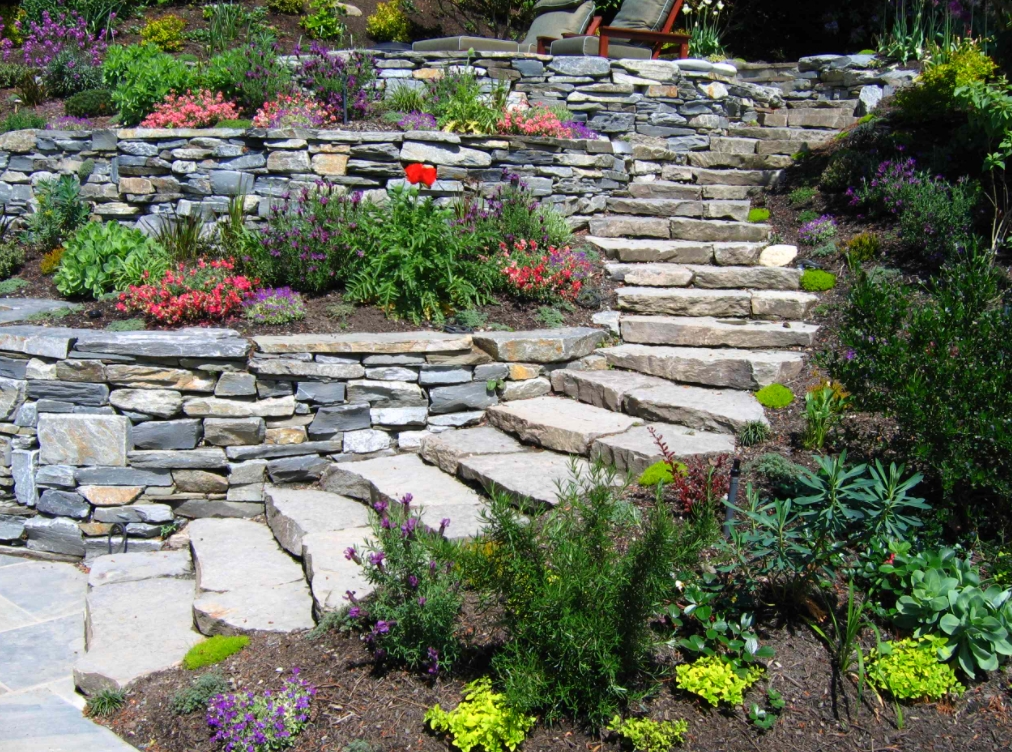
- Retaining walls: Structures built to hold back soil and create level areas on sloped terrain.
- Pathways and walkways: Paved surfaces that guide foot traffic and connect different areas of the landscape.
- Driveways: Paved surfaces providing access for vehicles to the property.
- Fences and walls: Barriers constructed for privacy, security, or aesthetic purposes.
- Outdoor kitchens: Cooking and dining areas equipped with amenities such as grills, countertops, and seating.
- Fire pits and fireplaces: Features designed for warmth, ambiance, and socializing in outdoor settings.
- Hardscaping refers to the non-living, man-made elements incorporated into outdoor spaces to provide structure, organization, and functionality.
- Unlike landscaping, which focuses on natural elements, hardscaping utilizes materials such as stone, wood, concrete, brick, and metal.
- Hardscaping elements can include:
- Patios: Paved areas designed for outdoor dining, seating, and entertainment.
- Decks: Raised platforms typically constructed from wood or composite materials, providing additional outdoor living space.
- Retaining walls: Structures built to hold back soil and create level areas on sloped terrain.
- Pathways and walkways: Paved surfaces that guide foot traffic and connect different areas of the landscape.
- Driveways: Paved surfaces providing access for vehicles to the property.
- Fences and walls: Barriers constructed for privacy, security, or aesthetic purposes.
- Outdoor kitchens: Cooking and dining areas equipped with amenities such as grills, countertops, and seating.
- Fire pits and fireplaces: Features designed for warmth, ambiance, and socializing in outdoor settings.